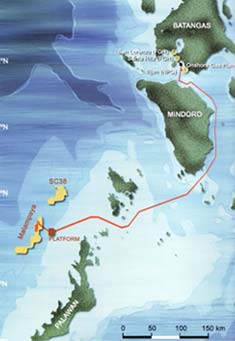

The Philippine government’s push to strengthen long-term domestic energy security has reached a critical milestone with the successful execution of the Malampaya Phase 4 (MP4) project.
As partner to the government, the Service Contract No. 38 (SC 38) Consortium led by Prime Energy alongside UC38 LLC, Prime Oil & Gas, and PNOC Exploration Corporation, successfully drilled, completed, and tested the Malampaya East-1 (MAE-1) and Camago-3 wells in 2026. These are expected to extend the operating life of Malampaya by around six years, reinforcing the Philippines’ first and only indigenous gas resource.
The discoveries reflect how SC 38 Consortium has benefitted from the Philippine government’s drive to sustain domestic gas production aimed at long-term energy independence.
Backed by the policy direction of President Ferdinand R. Marcos Jr. and the Department of Energy (DOE), key reforms including the 15-year extension of SC 38 and the passage of the Philippine Natural Gas Industry Development Act have provided the stability needed to deliver the country’s first significant offshore gas discovery in more than a decade within a compressed two-year execution window.
“What MP4 demonstrates is that when government sets clear policy direction and provides long-term institutional support, Filipino-led teams can deliver world-class results in complex energy projects. This reflects the government’s leadership in advancing the energy security agenda,” Prime Energy said.
The SC 38 Consortium continues to work closely with the DOE and project partners to target first gas delivery from MP4 by the fourth quarter of 2026, in line with the long-term plan of a secure energy future for the Philippines.
Prime Energy expressed appreciation to President Marcos and the DOE for sustaining investor confidence in indigenous gas development through enabling policies and regulatory continuity.
“MP4 shows what is possible when government and industry move in step with urgency and purpose. With government leadership and private sector execution working together, we can unlock more indigenous resources and reduce dependence on imported fuel,” the company said.
“We’re not just extending Malampaya—we’re building a foundation for what comes next. The next phase is about scaling exploration, strengthening infrastructure, and supporting the government’s broader vision for a more resilient and self-reliant energy system,” it added.
Indigenous natural gas remains a critical pillar of the government’s energy security agenda, offering a more stable and cost-effective alternative to imported fuels while buffering the economy from global price volatility.
Over the past two decades, Malampaya has also contributed more than $14 billion in revenues to the Philippine government—direct fiscal benefits that underscore the value of domestic resource development.